
How to Brew Beer
Brewing Beer using a Beer Kit, Malt Extract or All Grain.
Brewing your own beer at home is easy when you use one of the many kits on the market today. The procedure varies slightly depending upon which type of kit you use, and the manufacturers instructions should always be followed precisely, but, in general it entails little more than adding yeast to a sugar rich solution of malted barley in a brewing bin and then leaving it for 5-7 days in a warm place to ferment. During this period, the yeast converts the sugars present into alcohol and carbon dioxide. At the end of the fermentation period, when most of the yeast has died and fallen to the bottom of the brewing bin, the beer is transferred to either bottles or a barrel, given a little extra sugar, sealed and left for a couple of weeks to clear and mature (produce some more carbon dioxide to protect it and give it "fizz"). Around three weeks after starting the kit, it will usually be ready to drink.
What do I need?
You can brew beer with very little equipment, some of which you will probably already have at home, but it is probably easier (and will usually produce better results) if you have some specific equipment that you keep and use only for brewing. As an absolute minimum you will need:
- Something to boil water in - you only need a couple of pints to make up a kit, so a kettle is fine.
- Something to brew the beer in - a bucket with a 5 gallon capacity is best.
- Something to store the beer in when it has finished fermenting - beer bottles or a barrel.
- Something to transfer the beer from the brewing vessel to the storage vessel - a simple syphon tube is ideal.
As long as the equipment is clean and sterile, you could feasibly brew the beer in a dustbin and transfer it to empty plastic fizzy drink bottles using a measuring jug and a funnel (not too long ago, that was precisely how most homebrewing was done...) Realistically, better results will generally be obtained from using specialist equipment that can be easily cleaned and sterilised and kept specifically for brewing use.
As a minimum, the following equipment will be needed to allow you to make your first brew:
- A Beer Kit of your choice
- A tin opener
- Enough water to top up the kit to 5 gallons/23 ltrs.
- A 5 gallon/23ltr brewing bin and lid
- A cleaning/sterilising solution to clean all your equipment
- A syphon tube to transfer the beer from the brewing bin to the storage vessels
- New or re-used glass BEER bottles, plastic fizzy drinks bottles or a pressure barrel to store the beer
- Crown Caps and a Capper if using glass beer bottles
The following items are not absolutely necessary but will make life a lot easier:
- A hydrometer to check the Specific Gravity of the brew as it progresses
- A thermometer to check the temperature of the brew
- A thermostatic heater to maintain the correct temperature to promote fermentation (18-22º C)
- A long handled Brewing Paddle or Spoon to make mixing the beer kit easier
- A Syphon tap or an automatic bottle filler to make bottling easier
- Patience - though not as much as when making wine.....
It is possible, to save money and a bit of effort, to ferment your beer in a pressure barrel and then store it in the same barrel without syphoning it off the dead yeast. Providing that you plan to drink the beer within a few weeks, there is, in principle, nothing wrong with this approach. If, however, the beer sits on dead yeast for any length of time, which it will if you are planning to mature it for several weeks to improve the body and flavour, there is always the chance that the beer will become tainted and pick up "off flavours". There is also the likelihood using this method that the layer of sediment created will be so deep that some will be sucked through your tap into EVERY pint you pull, unless you are using a Top Tap barrel fitted with a float system.
Personally, I would always choose to brew in a dedicated brewing bin and then transfer the beer to a wide necked pressure barrel to mature. In almost 20 years of using this method, I have never had a failed or tainted brew, but I may just have been lucky.......
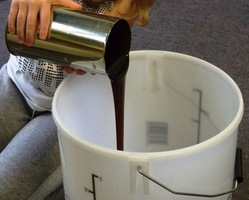
Once they have made a few beer kits and are happy with the general process of fermenting and bottling/barrelling their beer, many home brewers want to move on and start taking greater control of the colour, flavour and bitterness of their beer. The simplest way to do this is to move onto Brewing with Malt Extract. It does require some additional equipment and a little more time than brewing with beer kits, but the results can often be considerably better than even the best two can kits can produce.
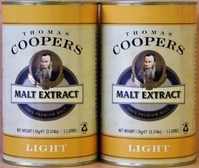
I have a selection of recipes available for making beers from Malt Extract, which can be viewed here.
If you really get sucked into the hobby (or "craft" as the aficionados prefer to say), you will eventually want to move onto brewing from scratch using grain in the same way that commercial brewers do it, though on a much smaller scale.
There are two general ways to do this, the "Brew in a Bag Method" in which the grain is processed, boiled and cooled in a single boiler.
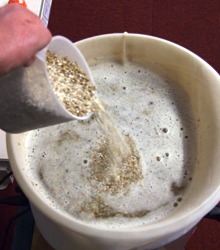
The "Three Vessel Method" in which the grain is processed in one vessel, rinsed with water from a second vessel and then boiled and cooled in a third vessel.
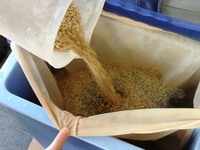
Each of these brewing method has its own advantages and disadvantages and you can easily swap from one to the other depending upon how much equipement and time you have available.